The moment you find out you're pregnant, food starts to feel different. Every bite matters for your baby too, and that can feel overwhelming. This is where a simple pregnancy diet chart helps. Good pregnancy nutrition is not about eating more. It is about eating right at each stage, and a good pregnancy diet chart changes as your baby grows.
In this guide, you will find a trimester-wise chart, sample meals from breakfast to dinner, and the foods to avoid. But here is what surprises most mothers. What your body needs in month two looks very different from what it needs in month eight. And getting that shift right makes all the difference.
What Is the Best Diet for a Pregnant Woman?
No single menu is perfect for pregnancy. A healthy pregnancy diet is simply one that is balanced, varied and built on fresh, home-cooked food. So, what is a good diet plan for a pregnant woman? It covers your baby's needs at every stage. A smart pregnancy diet chart puts quality before quantity.
Which nutrient deficiency is most common in pregnancy? It is iron-deficiency anaemia. The WHO estimates that more than a third of pregnant women worldwide are anaemic. Low iron can leave you tired and breathless, and it is linked to low birth weight.
The most nutritious foods for pregnant women are rich in these key nutrients:
| Nutrient | Why Your Baby Needs It | Everyday Food Sources |
|---|---|---|
| Folic acid | Supports healthy cell and DNA growth | Spinach, methi, oranges |
| Iron | Makes the blood that carries oxygen to your baby | Rajma, ragi, lean meat |
| Calcium | Builds strong bones and teeth | Milk, curd, paneer |
| Protein | Helps tissues and organs grow | Dal, eggs, chicken, soya |
| DHA/omega-3 | Supports brain and eye development | Walnuts, flaxseeds, low-mercury fish |
| Vitamin D | Helps the body absorb calcium | Sunlight, egg yolks, fortified milk |
| Iodine | Supports brain growth and thyroid health | Iodised salt, dairy |
With these nutrients in mind, building a healthy pregnancy diet chart becomes much easier.
Foods to Eat During Pregnancy Every Day
The best foods to eat during pregnancy are simple ones already in your kitchen. Wondering what foods pregnant women should eat every day? Start here:
- Whole grains: roti, oats and millets for steady energy and fibre.
- Pulses: moong, masoor and urad for protein.
- Dairy: two to three servings a day for calcium.
- Fruits: seasonal picks like guava, banana and apple.
- Vegetables: a colourful mix of carrots, pumpkin and beans.
- Nuts and seeds: a small handful of almonds or pumpkin seeds.
Together, these healthy foods during pregnancy form the base of a good pregnancy food chart.
How Does Nutrition Change in Each Trimester?
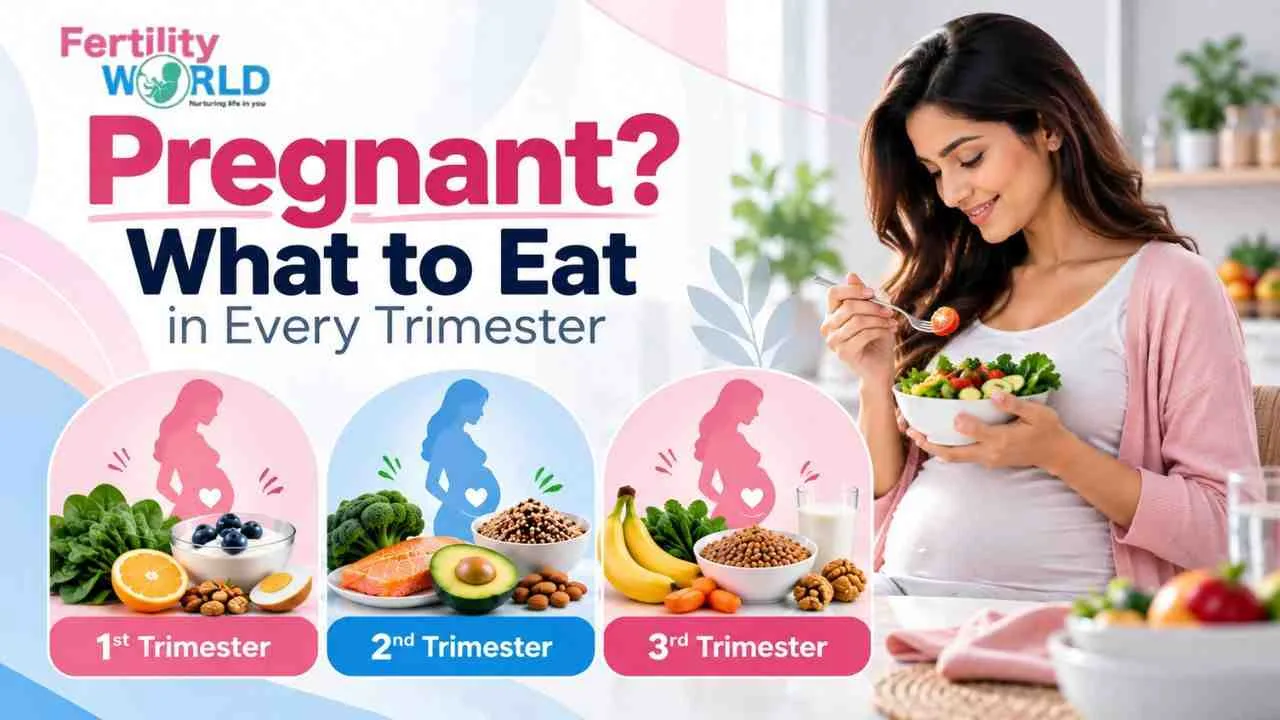
Your body's needs change as your baby grows. That's why a trimester-by-trimester pregnancy diet chart works better than a fixed menu for all nine months. In the first trimester, you don't need extra calories. From the second trimester, most women need around 350 extra calories a day, and slightly more in the third. That is about one extra wholesome snack.
What you eat shifts too. Folate leads in the early weeks. Iron and calcium take over in the middle months. DHA matters most at the end, when your baby's brain grows fastest. So you don't need to plan every single day. Following these changes month by month is simple and easy to keep up.
Is It Better to Eat Small Frequent Meals During Pregnancy?
For most women, yes. Big meals can feel heavy, especially as your baby grows. Five to six small meals a day usually work well: three main meals and two or three light snacks. So, how often should a pregnant woman eat? Roughly every three to four hours, from breakfast to a light bedtime snack.
Eating this way also keeps your energy and blood sugar steady through the day.
What Should a 1 to 3 Month Pregnancy Diet Chart Include?
The first three months are when your baby's organs begin to form. Yet this is also when many women feel too sick or tired to eat much.
A good 1 to 3 month pregnancy diet chart keeps things light. Focus on small portions of first-trimester foods rich in folate, iron, and protein, and easy to digest. Why does folate matter most in the first 3 months? It supports the development of the baby's neural tube, which becomes the brain and spine later on. This happens very early, often before you even know you are pregnant.
So, what should you eat during the first trimester? Think leafy greens, pulses, fruit, dairy and whole grains, in whatever amounts you can manage.
Can Certain Foods Ease Morning Sickness in the First Trimester?
Some foods can help. Dry toast or crackers first thing in the morning may settle your stomach. Ginger, in tea or cooking, is another option many women find useful. Cold foods often smell less strong than hot ones, so they can be easier to keep down. Sipping water throughout the day also helps, because dehydration can worsen nausea.
If you can't keep food or fluids down at all, speak to your doctor. Severe vomiting needs medical care.
Pregnancy Diet Plan for the 1st Trimester With Breakfast, Lunch and Dinner
Here is a simple day to start with. Swap items to suit your taste, and keep portions small if nausea is strong.
| Time | Meal | What to Eat (Veg / Non-Veg Option) |
|---|---|---|
| 7:00 AM | Early morning | Dry crackers and a few soaked almonds |
| 8:30 AM | Breakfast | Veg: vegetable poha with curd / Non-veg: vegetable omelette with whole wheat toast |
| 11:00 AM | Mid-morning | A seasonal fruit such as orange or guava |
| 1:30 PM | Lunch | Veg: roti, dal, palak sabzi and salad / Non-veg: roti, chicken curry and salad |
| 4:30 PM | Evening snack | Veg: roasted chana / Non-veg: one boiled egg |
| 7:30 PM | Dinner | Veg: moong dal khichdi with curd / Non-veg: rice, low-mercury fish curry and vegetables |
| 9:30 PM | Bedtime | A glass of warm milk |
For many women, the nausea eases around weeks 12 to 14 and appetite returns. That's when the next stage of your pregnancy meal plan begins.
How to Plan a 4 to 6 Month Pregnancy Diet Chart
For most women, the second trimester feels easier. The nausea fades, energy returns, and food starts to taste good again. Your 4- to 6-month pregnancy diet chart doesn't need a full rewrite. Start with the first trimester day above and make a few small changes.
Add one afternoon snack, like a curd smoothie or vegetable upma. Make lunch and dinner a little more filling with an extra roti. And add a fresh salad to both main meals. So, what should you eat during the second trimester? Mostly the same foods as before, in slightly bigger portions, with extra care for iron and calcium.
Best Second Trimester Foods for Baby's Growth
Along with the iron and calcium foods in the nutrient table, add these second-trimester foods:
- Sweet potato: fibre and vitamin A for your baby's eyes and skin.
- Broccoli: a mix of fibre, folate and plant calcium.
- Moong sprouts: light, protein-rich and easy to digest.
- Makhana: a crunchy, low-fat snack with calcium and protein.
- Amla: rich in vitamin C, which helps your body absorb iron.
Why Do Iron and Calcium Needs Rise in the Second Trimester?
Your blood volume rises by almost half during pregnancy. More blood needs more iron to carry oxygen to your baby.At the same time, your baby's bones begin to harden. If you don't get enough calcium, your body takes it from your own bones.
Which Foods Are Best in a 7- to 9 Month Pregnancy Diet Chart?
In these last three months, your baby puts on most of their birth weight. Their brain also grows faster than at any other stage. That's why a 7- to 9-month pregnancy diet chart leans on DHA-rich foods, steady protein and plenty of fibre.
So, what should you eat during the third trimester? Keep eating iron- and calcium-rich foods, and add a daily source of DHA. Also choose third-trimester foods that sit well in your stomach, like soups, daliya, and soft dal.
Why Does Heartburn Get Worse in the Third Trimester?
As your baby grows, your uterus pushes up against your stomach. Pregnancy hormones also relax the valve at the top of the stomach, so acid moves up more easily. Spicy, fried and oily foods are common triggers. So are tomato-heavy gravies, coffee and fizzy drinks.
Steamed or lightly cooked meals, cool buttermilk and an early dinner can help. Try to wait two to three hours after eating before you lie down.
Sample Pregnancy Diet Plan for the Third Trimester
Here is a simple pregnancy diet example for a typical day in the last three months.
| Time | Meal | What to Eat (Veg / Non-Veg Option) |
|---|---|---|
| 7:00 AM | Early morning | A few soaked walnuts with warm water |
| 8:30 AM | Breakfast | Veg: vegetable daliya with milk / Non-veg: egg bhurji with multigrain toast |
| 11:00 AM | Mid-morning | Buttermilk and a pear |
| 1:30 PM | Lunch | Veg: brown rice, rajma and cucumber raita / Non-veg: brown rice, low-mercury fish curry and raita |
| 4:30 PM | Evening snack | Veg: paneer tikka / Non-veg: grilled chicken strips |
| 7:00 PM | Dinner | Veg: roti, mixed vegetable curry and dal / Non-veg: roti, chicken stew and vegetables |
| 9:30 PM | Bedtime | A glass of warm milk |
This plan works whether you eat meat or not. But if you skip meat, fish or eggs completely, a few nutrients need extra care.
Is a Vegetarian Pregnancy Diet Plan Enough?
For most women, yes. Many mothers have healthy pregnancies on vegetarian food alone.
The protein and iron foods in the nutrient table work just as well for vegetarians. What matters is planning, so your vegetarian pregnancy diet chart doesn't miss anything important. Two nutrients need extra care. Vitamin B12 comes mainly from animal foods. And your body absorbs iron from plants less easily than iron from meat.
Vegetarian Sources of Protein, Iron and B12 in Pregnancy
These simple habits cover the gaps:
- Dairy every day: milk, curd and paneer are the main natural B12 sources for vegetarians
- Fortified foods: some breakfast cereals and plant milks have added B12
- Vitamin C with meals: a squeeze of lemon or some tomato helps your body absorb iron from dal and greens
- Tea and coffee timing: keep them at least an hour away from meals, because they block iron absorption
Whatever you eat, a few foods are best kept off your plate for now.
Which Foods Should Be Avoided During Pregnancy?
Most everyday foods are safe, but a few carry real risks for your baby. Knowing what foods should be avoided during pregnancy matters just as much as knowing what to eat. So, what diet is safe for pregnancy? One that leaves out these foods or swaps them for safer choices.
| Food to Avoid | Why It's Risky | Safer Swap |
|---|---|---|
| Raw or semi-ripe papaya | Contains latex, which may trigger contractions | Other seasonal fruits such as pear or pomegranate |
| Unpasteurised milk and cheese | May carry listeria, which can harm your baby | Pasteurised or boiled milk and packaged paneer |
| High-mercury fish (shark, swordfish, king mackerel) | Mercury can affect your baby's developing brain | Low-mercury fish like salmon or sardines, two to three times a week |
| Excess caffeine | More than 200 mg a day is linked to low birth weight | One cup of coffee or two cups of tea a day at most |
| Undercooked eggs and meat | May carry salmonella or toxoplasma | Eggs with firm yolks and meat cooked all the way through |
| Alcohol | No amount is known to be safe during pregnancy | Nimbu pani, coconut water or buttermilk |
Avoiding these foods protects your baby. But even a well-planned plate sometimes needs a little extra help.
Do You Need Supplements if You Eat a Balanced Diet?
In most cases, yes. Even a well-planned pregnancy diet chart can fall short on a few nutrients, because your needs rise faster than food alone can keep up. Folic acid in pregnancy comes first. How much folic acid is advised before and during pregnancy? The WHO recommends 400 mcg a day, ideally starting before you conceive.
Iron is the next big one. Many doctors prescribe iron tablets during pregnancy, starting in the second trimester, when your blood volume grows fastest. Some women also need calcium tablets alongside. Prenatal vitamins can cover smaller gaps, like vitamin D or iodine. But more is not always better, so take only what your doctor prescribes.
Speak to your doctor or a dietitian if you feel unusually tired or breathless, as this may point to anaemia. The same applies if you are diagnosed with gestational diabetes, because your meal plan will need adjusting.
Can a Pregnancy Diet Chart Help You Have a Healthy Baby?
It can make a real difference. Good food gives your baby the building blocks to grow, from folate in the early weeks to iron and calcium in the middle months and DHA towards the end. The key is to follow a simple plan, not a perfect one. Use the trimester charts above as your starting point, adjust them to your tastes, and keep your doctor in the loop.
Some days you'll eat well, and some days you'll barely manage toast. That's okay. A pregnancy diet chart for a healthy baby is about small, steady choices, and each one is an act of love for the little life growing inside you.
What readers ask us about this
Do I really need to eat for two during pregnancy?
No. You need better food, not double portions. Your calorie needs stay the same early on and rise only a little later, as explained in the trimester guide above.
How much weight should I gain during pregnancy?
It depends on your weight before pregnancy. Women with a normal BMI usually gain 11 to 16 kg. If you start underweight or overweight, your target will differ, so ask your doctor.
How much water should a pregnant woman drink daily?
Aim for about 8 to 10 glasses, or 2 to 2.5 litres, a day. Milk, soups and buttermilk count too. Drink more in hot weather.
Is it safe to eat spicy food during pregnancy?
Yes, spicy food is safe for you and your baby. It can worsen heartburn, though, especially in the third trimester, so go easy if it troubles you.
Which fruits are best to eat during pregnancy?
Most fresh, well-washed fruits are good choices. Bananas, apples, pears, pomegranates and guavas give you fibre, vitamins and natural energy. Try to eat a mix of colours.
Is ghee good for you during pregnancy?
Yes, in moderation. One to two teaspoons a day can be part of your healthy fat intake. Despite the popular belief, ghee does not induce or ease labour.
Are dry fruits safe to eat every day in pregnancy?
Yes, a small handful a day is fine. They are rich in minerals but high in calories. If you have gestational diabetes, limit dates and raisins because of their sugar.
Is it okay to give in to food cravings when pregnant?
Small treats now and then are fine alongside healthy meals. If you crave non-food items like clay, chalk or ice, tell your doctor. It can be a sign of low iron.
Which foods help with constipation during pregnancy?
Fibre-rich foods, plenty of water and light activity all help. Iron tablets can make constipation worse. Always check with your doctor before taking a laxative.
Does eating well improve the chances of a normal delivery?
A healthy diet supports a smooth pregnancy. But it doesn't decide how you deliver. That depends on medical factors your doctor will guide you through.