IVF Success Predictor
An honest estimate of your chance of a baby from IVF, for your age, AMH, weight and history.
- National registry data
- Stays on your phone
- Own or donor eggs
Your chance of a baby from one IVF cycleExample
51%
Likely between 40% and 65%
Out of 100 people like you, about 51 would have a baby from one full IVF cycle.
If you need more than one cycle
- Within 1 cycle51%
- Within 2 cycles73%
- Within 3 cycles84%
The average at 34 with your own eggs is 51%. How we worked this out
How we worked it out
Age sets the starting point. Your answers move it a little.
- Start from national dataThe chance of a baby from one full IVF cycle for your age, from the US national IVF registry (SART, 2021).
- Adjust for your answersEach answer nudges it up or down by a modest, rounded amount, in the direction research shows.
- Show a range, not a promiseReal life varies, so we give a likely range as well as the single number.
Starting point, age 34, own eggs: 51%
- Your BMI25 to 29.9-5%
- AMH level1 to 3.5No change
- Pregnant before?Yes+10%
- Years trying3 to 5-5%
- IVF cycles so farNoneNo change
- Main reason, if knownUnexplainedNo change
| Age | Chance per cycle |
|---|---|
| Under 35 | About 51% |
| 35 to 37 | About 38% |
| 38 to 40 | About 25% |
| 41 to 42 | About 13% |
| Over 42 | About 4% |
| Donor eggs, any age | About 45% |
IVF success by age
Age matters most, because egg quality changes with it
Egg quality changes
After about 35, more eggs carry the wrong number of chromosomes, so fewer embryos can grow into a baby.

Fewer eggs each cycle
The number of eggs collected in one cycle usually falls with age, leaving fewer embryos to choose from.

Donor eggs change the picture
With eggs from a young donor, the chance follows the donor's age: about 45% whatever your own age.

Starting sooner helps
Over 35 and trying for 6 months? It is worth seeing a specialist now rather than waiting.
What helps
Some things are in your hands. The rest is the lab's job.
Small changes add up, and a good clinic makes the most of every egg and embryo.
What you can do

A healthy weight
If your BMI is 30 or more, losing even 5 to 10% of your weight before treatment can help.

Stop smoking
Smoking lowers the chance of success for both partners. Stopping helps within months.
Look after both of you
Sperm health matters too: less alcohol, no smoking and a healthy weight for your partner.
Do not wait too long
Age matters most. If you are over 35 and have tried for 6 months, see a specialist.
What a good clinic does
A good lab
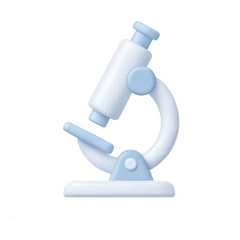
Stable conditions in the embryology lab make a real difference to embryo quality.
Growing and choosing embryos
Growing embryos to day 5 helps the team choose the one most likely to implant.
Freezing the rest
Frozen embryos give you more chances from one egg collection.
A plan for next steps
If a cycle does not work, a review of what happened shapes the next one.

Before you choose a clinic
Six questions to ask about any success rate
A good clinic is happy to show you how it counts. You deserve clear numbers.
- 1
What are your live birth rates for someone my age?
- 2
Are they per egg collection, per transfer, or per started cycle?
- 3
Do your figures include frozen embryo transfers?
- 4
How many embryos do you usually transfer, and why?
- 5
What happens if the first cycle does not work?
- 6
What would two or three cycles cost in total?
Questions
What people ask about IVF success rates

A number is only a starting point. Your story is still being written.
Talk to a specialist about your own chances, without any pressure.
- 51%The chance per cycle under 35, with your own eggs
- 45%The chance per transfer with donor eggs, at any age
- 3 cyclesYour chance keeps adding up with each one
What is the success rate of IVF?
It depends most on age. With your own eggs, national data show about 51% of cycles lead to a baby under 35, about 38% at 35 to 37, 25% at 38 to 40, 13% at 41 to 42 and 4% over 42.
How accurate is this IVF success predictor?
It gives a fair estimate from national data and published research, shown as a range. Your specialist can give a more personal figure after tests and a scan.
Does AMH affect IVF success?
AMH mostly shows how many eggs you are likely to collect. A very low AMH usually means fewer eggs and a lower chance per cycle, but many women with low AMH still have a baby.
Does BMI affect IVF success?
Yes. A BMI of 30 or more lowers the chance a little, and 35 or more lowers it more. A healthy weight before treatment helps.
Is IVF with donor eggs more successful?
Often, yes, especially over 40. The chance depends mostly on the donor's age, so it stays around 45% per transfer even for older women.
How many IVF cycles does it usually take?
Many people succeed in the first cycle, and the chance keeps adding up over two or three cycles. That is why we show your chance within 1, 2 and 3 cycles.
Does a previous pregnancy help?
Having been pregnant before is linked with a slightly higher chance of success with IVF.
Why do clinics quote different success rates?
They count in different ways: per started cycle, per egg collection or per transfer, with or without frozen embryos. Always ask how a rate is counted.
Can I improve my chances of IVF success?
Yes, a little: a healthy weight, no smoking, less alcohol and caffeine, and good sleep for both partners. The biggest factor, age, is why starting sooner helps.
Are my answers saved?
Only in this browser on this device. Nothing is sent to us. Use "Start again" to clear them.
Please read: an estimate, not a promise
- This is an estimate for information only, not a medical prediction for you. It uses US national registry data (SART, 2021) for the chance by age and rounded factors from published research for the other answers.
- Results differ between countries, clinics and labs, and your own tests (AMH, scan, semen analysis) matter. Your fertility specialist can give you a personal figure.
- A lower estimate does not mean IVF will not work for you, and a higher one is not a promise. Please talk to a specialist before making decisions about treatment.
- If thinking about the numbers feels hard, you are not alone. Our team is happy to talk it through with you.