
How IVF works, one step at a time
One cycle takes about four to six weeks. Here is what happens at each step, how it may feel and what helps, in plain words.
- 10 steps
- About 4 to 6 weeks
- Written for patients

- PrepareTests and a plan, 2 to 4 weeks before
- StimulateDaily injections and scans, about 10 days
- Collect and growEggs collected, embryos grown, about 5 days
- Transfer and waitOne embryo placed, then about 2 weeks
The 10 steps of one IVF cycle
Your clinic may change the timing to suit you. This is the usual path.
-
Before you start
Step 1: First consultation and tests
You meet your fertility doctor, talk through your history and agree a plan. Blood tests, a scan and a semen test show where to begin.
 A free tool for this stepAMH Level Checker
-
About 8 to 12 days
Step 2: Stimulating the ovaries
Small daily hormone injections help several eggs grow at once. A nurse shows you how, and it soon becomes routine.
 A free tool for this stepIVF Medication Tracker
-
Every 2 to 3 days
Step 3: Monitoring scans
Short scans and blood tests follow the growing follicles, and your doctor adjusts the dose if needed.
-
About 36 hours before collection
Step 4: The trigger injection
One last injection helps the eggs finish maturing. It is timed to the minute, because collection is planned around it.
-
Day 14 to 16
Step 5: Egg collection
Under light sedation, a fine needle guided by ultrasound collects the eggs. It takes about 20 minutes and you go home the same day.
-
The same day
Step 6: Fertilisation in the lab
Eggs and sperm are brought together in a dish, or one sperm is placed in each egg (ICSI). The clinic calls the next morning.
-
Day 1 to 5
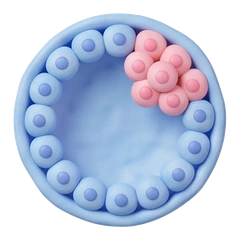
Step 7: Embryos grow
The embryos grow in an incubator while the embryologists watch. Good ones not transferred can be frozen.
 A free tool for this stepEmbryo Grading Guide
-
Day 3 or day 5
Step 8: Embryo transfer
A thin, soft tube places one embryo in the womb. It feels much like a smear test and is over in minutes.
 A free tool for this stepImplantation Calculator
-
About 10 to 14 days
Step 9: The two-week wait
You usually take progesterone while the embryo tries to implant. Normal daily life is fine.
-
About 2 weeks after transfer
Step 10: The pregnancy test
A blood test measures hCG. Your doctor talks you through the result, whatever it is, and what comes next.
 A free tool for this stepHCG Level Checker

You are not doing this alone
A small team walks every step with you. These are the people you will meet.
- Your fertility specialistPlans your treatment, does the collection and transfer, and explains every result.
- Your nurseTeaches the injections, answers the everyday questions and is a phone call away.
- The embryologistsCare for your eggs, sperm and embryos in the lab, day and night.
- A counsellorTime to talk about the hard parts, alone or together, whenever you need it.
- Your coordinatorBooks your visits, keeps the dates straight and finds you answers.
Questions
What people ask before they start
Still unsure? A specialist can answer yours in a first conversation.
- 4 to 6 weeksfrom the first injection to the test
- About 20 minutesfor egg collection, home the same day
- One embryois what most clinics transfer now
How long does one IVF cycle take?
From the first injection to the pregnancy test usually takes about four to six weeks, with a few weeks of tests and planning before that.
Does egg collection hurt?
You are given light sedation, so most people feel little during it. Cramps like a heavy period are common for a day or two afterwards.
Can I keep working during IVF?
Most people do. You will need some flexibility for morning scans, and it is wise to take the day of egg collection off.
What happens if the cycle does not work?
It is common and it is not your fault. Your doctor will review the cycle with you and suggest what could come next.
Read more about IVF

Your first step
Ready to talk it through?
Every story is different. A specialist will look at yours and tell you honestly whether IVF is the right next step, or whether something simpler could help first.
Planning ahead? Read what to expect at your first visit or try our free fertility tools