
Fertility Age Test
Nine quick questions about your age, body and lifestyle, and how they shape your chance of pregnancy, in plain words.
- About 2 minutes
- Stays on your phone
- Plain answers
Your eggs over a lifetime
You are born with every egg you will ever have
The number falls all through life, and only about 400 are ever released. That is why age matters so much for fertility.
At birth
About 1 to 2 million
Every egg you will ever have is already there.
At puberty
About 300,000
Most are lost before periods even begin.
At 37
About 25,000
The fall speeds up in the late thirties.
At menopause
About 1,000
Around 51 on average, periods stop.
Your chance by age
The chance of pregnancy within a year of trying
For a healthy woman having regular sex, without treatment. The fall is gentle in the early thirties and steeper after 35.
Source: Leridon, Human Reproduction, 2004, as cited by fertility societies.
- Age 25About 86%You
- Age 30About 75%You
- Age 35About 66%You
- Age 40About 44%You
- Age 45Under 15%You
What you can change
Age is fixed. These six things are in your hands.

Stop smoking
It is the single biggest lifestyle change for both of you. Benefits start within months.

A healthy weight
A BMI between 18.5 and 25 helps regular ovulation. Small steady changes count.

Less alcohol
Keep to a few drinks a week, or none while you are trying.

Easy on caffeine
Up to about 200 mg a day, roughly two cups of coffee, is fine for most people.

Rest and sleep
Seven to nine hours a night helps your hormones and your mood.

Your partner too
Sperm renews every three months, so healthy habits help him quickly.
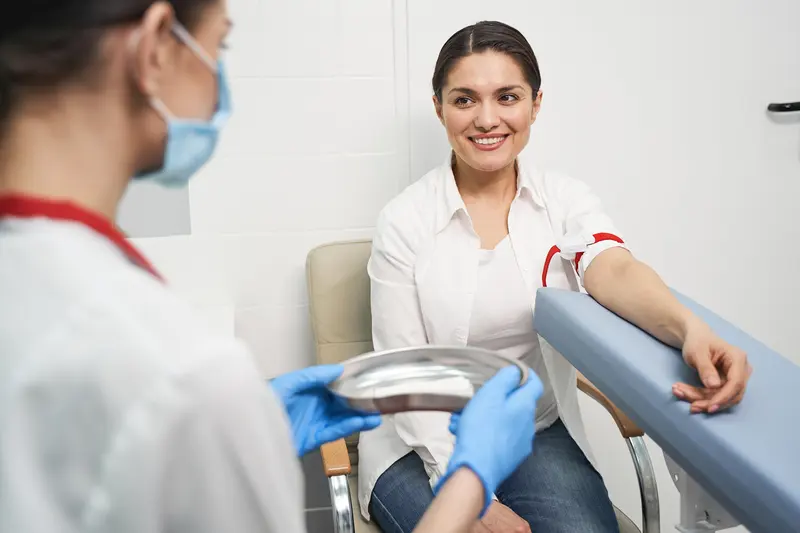
Tests that tell you more
A quiz gives a picture. These tests give answers.
AMH blood test
Shows roughly how many eggs are left. Any day of the cycle.

Antral follicle scan
An ultrasound that counts the small follicles in each ovary.
Day 2 to 3 hormones
FSH and oestrogen early in the cycle add to the picture.
Semen analysis
A simple test for your partner. Male factors are common and treatable.
When to see a specialist
How long to try before asking for help
- Under 35After 12 months of trying
- 35 to 39After 6 months of trying
- 40 or overStraight away, before you start trying
See someone sooner if you have
- Periods that are very irregular or have stopped
- PCOS, endometriosis or a thyroid condition
- Two or more miscarriages
- A partner with a known sperm problem
- Past surgery or infection in the pelvis

Questions
What people ask about age and fertility

Knowing is the first step. You have already taken it.
Talk to a specialist about your own fertility, without any pressure.
- 75%Chance of pregnancy within a year at 30
- 44%Chance within a year at 40
- 6 monthsHow long to try from 35 before seeing a specialist
What is a fertility age?
It is the age at which an average woman would have the same chance of getting pregnant as you, once your lifestyle and health answers are taken into account. It is an illustration, not a medical test.
At what age does fertility start to decline?
Slowly from the early thirties, and faster after 35. By 40 the chance of pregnancy within a year is about 44%, compared with about 75% at 30.
How can I test my fertility?
An AMH blood test and an antral follicle scan show your egg reserve, and a semen analysis checks your partner. A specialist can arrange them together.
Can lifestyle changes improve fertility?
Yes. Stopping smoking, reaching a healthy weight and cutting down alcohol all help, for both partners. They cannot turn back age, but they help you make the most of it.
Does a man's age affect fertility?
Yes, though less than a woman's. After about 40, sperm quality falls and it can take longer to conceive.
How long should we try before seeing a doctor?
Twelve months if you are under 35, six months from 35 to 39, and straight away from 40 or if you have irregular periods or a known condition.
Is egg freezing worth it?
It can help if you want to delay pregnancy, and works best before 35. A specialist can talk it through with you.
Where are my answers saved?
Only in this browser on this device. Nothing is sent to us. Use "Start again" to clear them.
Please read: a picture, not a diagnosis
- This test gives general information, not a diagnosis. It uses published average chances of pregnancy by age and rounded factors from research for your other answers.
- Your own fertility depends on things a quiz cannot see. Tests such as AMH, a scan and a semen analysis give a much clearer picture.
- A higher fertility age does not mean you cannot get pregnant, and a lower one is not a guarantee. Please talk to a specialist about your own situation.
- If you are worried, you do not have to wait. Our specialists are happy to talk it through with you.